Showing posts with label Singapore. Show all posts

Sunday, 31 January 2016

ABCs of CNY

Chinese New Year (CNY), Lunar New Year (calendar based on the moon, rather than the sun), Spring Festival, Tet, Imlek, ... these are just a few names for festivities to mark the beginning of the year according to the Lunar Calendar. Celebrated mostly by ethnic Chinese people around the world, it is considered a major holiday in much of Asia.

Since Chinese people can be found in almost every part of the world, some of our customs and traditions have taken on a local flavour. Singapore is no exception. So, this is my humble interpretation of what this holiday is to me. (This list is by no means exhaustive.)

A is for Abalone

This shellfish is a must for any Chinese New Year meal. Bought in cans and eaten in various ways, the price varies from year to year, according to the country of origin and size. As of 5 December 2015, the demand for abalone in Singapore increased overnight. Due to a ban on serving fresh-water raw fish, restaurants and eateries have now substituted raw fish for abalone in the traditional raw fish salad or 'lo hei' (see "L is for Lo Hei").

B is for Bak Kwa

Bak kwa 肉干 is barbequed pork slices. Available all year round, the demand and price soars about three weeks before the New Year. Pork is minced, seasoned with a secret marinade, dried, then barbecued by hand. The whole process takes a few days from slabs of meat to finished product.

C is for 春节 (pronounced 'Chun Jie')

C is also for Chinese New Year! Officially, Chinese New Year is known as 春节 or Spring Festival in Chinese as the first day of the lunar new year marks the beginning of Spring.

D is for 大吉大利 (pronounced 'da ji da li')

Loosely translated as 'good luck', this is one of the standard greetings during this festive season. Many Chinese homes will have this phrase pasted around the living room, much like a 'Merry Christmas' sign, as decor.

E is for Egg Rolls (蛋卷)

More commonly known as Kueh Belanda (literally 'Dutch cake' in Malay), this delicate, crispy roll is an absolute must in every home. It is made from eggs, flour, coconut milk and sugar. Painstakingly baked over a charcoal fire and quickly rolled by hand when hot, this deceptively light biscuit packs quite a few calories in one roll.

F is for Family

The New Year is a time for family from far and wide to come home for a reunion dinner on the eve of the new year. For the next few days, friends and relatives will visit one another to renew ties and stay in touch.

G is for 恭喜发财 (pronounced 'Gong Xi Fa Cai')

This is the standard greeting when you meet someone during the festive season, which lasts 15 days. For the non-Chinese speaking, a simple "Happy New Year" or 新年快乐 (pronounced 'xin nian kuai le') will do too.

H is for 'Hee Piaw‘ Soup 鱼鳔汤

In any Peranakan home, this soup is an absolute must for the reunion dinner. The name of the dish comes from its main ingredient, which is 鱼鳔 (pronounced 'yu bio') or the air bladder of the eel. Other ingredients in the soup are meat balls (made from minced pork, minced squid and crab meat), pig's stomach, sea cucumber, pork ribs and cabbage.

I is for I Love Chinese New Year!

J is for ’Juang Lo‘ 火锅

In a Hokkien (Fujian) home, the reunion dinner will be steamboat (sometimes knows as hot pot or 火锅 'huo guo'). Raw meat, seafood and vegetables will be prepared and served on plates around the table. In the middle of the table will be a boiling pot of soup. Each member of the family will take whatever food he likes from any of the array of raw food, dip it in the pot of soup to be cooked, then eat it piping hot. The fun is in the cooking and sharing of food around the table.

K is for Kueh-kueh

Kueh means 'cake' or any kind of pastry in Malay. Repeating the word makes it plural. Go to any home and you will find cakes, sweets, pastries, of a myriad display and flavour.

L is for ’Lo Hei‘ 捞起

Literally meaning 'toss up', this dish is uniquely Singaporean. It was created and popularised by local Cantonese chefs who owned a famous restaurant. Served only during the new year, it is a salad of sorts, with raw fish. Due to the ban on raw fresh water fish, the fish has now been replaced by abalone (see A is for Abalone).

M is for Mandarin Oranges

When visiting family and friends, mandarin oranges 柑 are a must. The minimum number is two. They must always be presented in even numbers. The recipient will return you the same number of oranges. If you are going to many homes, you will only need to leave home with two oranges and keep exchanging them at each home you visit. Recycling must have been an ancient Chinese custom.

N is for 年糕 (pronounced 'nian gao')

Literally translated as 'new year cake', this brown-coloured, round confection is served only during the new year. Eating it is supposed to guarantee you upward mobility in the days and months ahead (年年升高 pronounced 'nian nian sheng gao').

O is for ’Ong Lye‘ 黄梨

This practice is for the Hokkien family, if you are superstitious. In the Hokkien language, a pineapple is called 'ong lye'. This word is the same pronunciation for the word meaning 'wealth comes'. At the opening of a new business or before entering a new home, the Hokkien family will roll a pineapple from the front door into the premises for good luck. It is common to see paper pineapples hanging from the ceiling as decor.

P is for 盆菜 (pronounced 'pen cai')

This dish is traditional in Hong Kong. Originally, all the leftovers during the reunion dinner were placed in a large clay pot and simmered over a slow fire. This was the meal for the next few days of the new year. Today, it has become a specially made pot of expensive seafood items. Many hotels prepare this dish for families to order as takeaway for dinners at home.

Q is for Queues

Tis the season to queue for bak kwa 肉干. As the new year draws closer, queues in Chinatown outside the most famous store can go for kilometres round the block. Average waiting time is known to be eight hours. (See B is for Bak Kwa)

R is for Red Packets 红包

Red envelopes containing cash are given to grandparents, parents, elderly relatives, singles, and children. How much cash is in each envelope depends on who the recipient is, how close the relationship, and possibly how needy the recipient may be. Only one rule applies: total amount must always be in even numbers and absolutely not ending in 4 e.g. $4, $14, etc. The number 4 sounds like the word for death.

S is for Sugar

90% of what you eat during the new year contains this ingredient: cakes, cookies, soft drinks. If you are not careful, you will end up with a massive sugar overload before the first day of festivities is over.

T is for pineapple Tarts

This is a must for the new year, since pineapple has an auspicious meaning (see O is for Ong Lye). The basic recipe is pineapple jam wrapped in a flour and butter pastry. What the finished product looks like depends entirely on the creativity of the baker.

U is for Unusual Flavours

Singaporean palates are increasing hard to please. Each year, bakeries have to come up with unusual flavours for cookies. Some very local flavours this year include nasi lemak cookies (nasi lemak is a local dish of rice cooked in coconut milk, anchovies with peanuts, omelette, and a slice of cucumber), and dried shrimp floss cookies.


V is for Values

The festive season is for the older generation to pass down family and traditional values to the next generation. Values define a society. The stronger the family values, the stronger the society will be.

W is for Weight Gain

This is unavoidable, considering the copious amounts of food consumed in those few days. Unless you are very disciplined, it is very difficult not to gain some weight, even if it is only a few hundred grams.

X is for eXtra Kilos I need to shed

Ditto W is for Weight Gain above.

Y is for Young and Old

The festive season is for families to get together. Young and old enjoy each other's company. Family bonds are renewed and strengthened.

Z is for Zzz

After the festivities, we will all need lots of zzzz to make up for all the energy spent preparing, cooking, eating, washing, visiting friends and relatives, etc.

Here's wishing you a Happy and Prosperous New Year!

Wednesday, 12 August 2015

Singapore's national footwear

National costume? Check. We've all heard of that.

National footwear? Hmmm ...

What do the majority of people in your country wear on their feet? I would consider that the national footwear.

In tropical Singapore, the national footwear happens to be flip flops. It's the footwear of choice in the heat and in the rain. We wear flip flops for comfort and practicality.

For a fun day out, wear shorts, a t-shirt and complete the look with a pair of flip flops. Ready!

Relac! Wear flip flops!

P.S. I think there are many other countries who can also say that their national footwear is flip flops. Look at Havaianas from Brazil.

Tuesday, 14 April 2015

Food descriptions

Nanyang Technological University (NTU), Singapore, has a new building that will be open soon. It is designed such that all the classrooms are round (instead of square or rectangular in shape), to facilitate discussion among students and their lecturers. In fact, the students will go online to read the lecture on their own time. Class time is meant solely for discussion of the week's lesson.

While the building has yet to have an official name (as of March 2015), it has been nicknamed the "dimsum baskets" building (pictured above). If you have ever seen pictures of steaming hot dimsum (点心) being served in bamboo baskets stacked up, you will get the idea.

When the design of The Esplanade (pictured on top right) performing arts venue was first released, many criticised it, saying it was ugly. However, very soon, the description that became most popular (and has stuck since) was "the durian". Today, bus and taxi drivers may not know "Esplanade", but if you tell them "The Durian", they know exactly where that is. (To the uninformed, durian (pictured on bottom right) is a fruit with a hard, spiky shell. It "smells like hell but tastes like heaven".)

This got me thinking about Singaporeans' obsession with food. We are known to be a nation of foodies. While eating breakfast, we are discussing what to eat for lunch and dinner, where to go for the best dish, how fresh the ingredients are, what special spices or herbs go into the dish, etc, etc. When we visit an aquarium, we do not simply admire the beauty of the fish in terms of colour or shape, but rather wonder how the fish would taste when cooked with some special combination of spices. Needless to say, we like our food!

In short, we Singaporeans tend to view quite a few things around us with "food-coloured" lenses. In the fast-paced life that we lead, we all need something to give us a break and brighten our day.

Happy eating!

Monday, 30 March 2015

Thank you, Britain!

"Thank you, Mr Lee" has been the most spoken and written phrase this past week (23-29 March 2015). Mr Lee Kuan Yew was a giant of a man. Much has been said about him publicly and privately. He was truly great inside and out.

So many Singaporeans displayed this week what Mr Lee had built over 50 years of independence. Around 479,500 people stood patiently in line for hours and hours (the longest being 10 hours) to pay their last respects to our Founding Father. I waited 4.5 hours. Countless volunteers and uniformed personnel worked tirelessly and cheerfully to make sure that order prevailed and people were well fed and hydrated. We picked up trash after ourselves, chatted with strangers, braved the sun and the rain, with nary a contrary word. Mr Lee, our father, taught us all this. And he has taught us well.

Yet, as I reflected on this, I realised that we Singaporeans really need to say, "Thank you, Britain" for teaching Mr and Mrs Lee how to be civil and care for the disadvantaged and marginalised. Both Mr and Mrs Lee studied at English schools (as opposed to Chinese schools of the day). They both furthered their education at prestigious colleges in Britain. Their two sons also studied there. It was in Britain that Mr Lee saw how the British treated everyone fairly. Injustice was not tolerated. Standing in line, or queuing, is what Britishers do best.

If you look not too far back in the news, you will have noticed that when the students in Hong Kong protested against China in 2014, they set the gold standard for civil protest. They sat quietly on the streets, many with school work in hand, ate and drank and cleaned up after themselves. Volunteers cheerfully gave out food and drink and collected trash.

From where did they learn civil behaviour? Britain.

Both Hong Kong and Singapore share the same heritage as former British colonies. The British gave us an English education, taught us manners and instilled in us a sense of law and order. Yes, Hong Kong and Singapore have a majority Chinese population. So what? British influence prevails in society, while Chinese values are drilled in us at home. We have become better persons because of the two cultures instilled in us.

So, while the world says, "Thank you, Mr Lee" for all that you have done for Singapore, I want to add "Thank you, Britain" for teaching Mr and Mrs Lee what it means to have the milk of human kindness and how to behave in civil society.

We owe you much. Thank you.

#rememberingleekuanyew

Monday, 23 March 2015

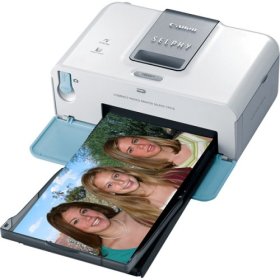
Selfie, Selphy

On the invitation of a friend, I went to view an exhibition by a university student group. In line with Singapore's Jubilee (50th year of independence), the theme of the exhibition was on Singapore's heritage and history. One of the projects the students organised was a Smiling Singapore wall. Visitors to the exhibition could have their photos taken and affixed to the wall, which bore an outline of the map of Singapore. When filled, the wall would show smiling faces representing the nation.

When I visited, my friend asked if I would like to have my photo taken for the wall. I gamely agreed. He then signalled to his friend to take my photo, saying, "Hey, take a selfie." (At least, that was what I thought I heard - "selfie".) A female student came along with a tablet to take my photo. I said to her that she had to take the photo because I wasn't very good at taking selfies. She smiled.

Photo taken, we walked over to the table to have it printed. That is where I noticed the name on the printer: "Selphy". Ohhhh ... so my friend was referring to "Selphy", not "selfie"! "Take a Selphy" is what he said.

Same sound, entirely different meaning.

The next time I get a photo taken, I should just let the people do their job and keep my mouth shut. Less confusion on my part.

Go take a selfie and have it printed on a Selphy! :)

Monday, 11 August 2014

Less jargon, less paper used

The Singapore government is continuing its efforts to write simply so that the average person can understand "the fine print", otherwise known as Terms and Conditions. To be honest, how many of us actually read every word of the T&Cs before we agree? I certainly do not.

Therein lies the root of all legal disputes. We sign our lives away without realising what we are resigning ourselves to.

To communicate better with the general public and to reduce the number of disputes by frustrated customers, this new government initiative is bringing more benefits than expected. People now understand the new government policies, while government agencies and all other companies that produce contracts (e.g. banks, insurance companies) have reduced the amount of paper needed to print the documents. Win-win situation all around!

Communication is all about getting the message understood. Simplifying the language is one step towards that goal.

Maybe more people will start writing, rather than lament that writing is so difficult.

Give it a try! Write simply!

Monday, 28 July 2014

Can you speak your national language?

What is the national language of Singapore?
Do you not all use English on a daily basis?
You mean there is a national language in Singapore?

The answer to the above questions is: Malay is the national language of Singapore, but English is generally the language of everyday business and communication.

Singapore is a multi-ethnic, multicultural nation. The first inhabitants of this island were Malays. All others were foreigners looking for work and finally became immigrants, then citizens. Malay is the national language in honour of those who lived here first.

Every morning of the school year, every school-going child will sing the National Anthem, Majulah Singapura, which is written in the national language. Ask the average school-going child whether he knows what he is singing, and the answer is most likely to be "no". The average non-Malay adult will give you the same answer. Many cannot even pronounce the words correctly, much less understand the meaning of the song.

It seems to me that in every country of the world, natural born citizens are conversant in their national language. Why is it different in Singapore? I have no answer. However, I am supportive of Prof Kishore Mahbubani's suggestion (article pictured above) that all Singaporeans be able to carry on a simple conversation in Malay. At the very least, know what we are singing every morning in school and on official occasions. I imagine Singaporeans would be embarrassed if they were ever asked what the National Anthem means.

Let us learn something new today. Learn how to pronounce the words of the National Anthem correctly. Learn the meaning of what we are singing. Be proud to be Singaporean!

I am!

Thursday, 24 July 2014

35 years of Speak Mandarin Campaign

2014 marks 35 years of the Speak Mandarin Campaign in Singapore. Quite an achievement for a country that turns 49 years old in August 2014.

Singapore began life as a trading port made up of Malay natives (who spoke only Malay) and immigrants from many parts of Asia and Europe. The British came to lay claim and made it a colony for a number of years. Due to the multi-ethnic make-up of the population, people spoke their own language of home, plus a smattering of whatever other languages that their friends and neighbours spoke. Communication between races and ethnic groups was made up of a mixture of each one's different language. Did it matter that grammar rules were thrown out the window? Certainly not. Communication was effective and efficient. Everyone got along quite well with each other.

After China chose to unite the entire country and ethnic groups in one national language, Mandarin, Singapore chose to follow suit. Being that the older generation spoke either fluent English, or whatever Chinese dialect they grew up speaking, or both, the big push to get all Chinese Singaporeans speaking Mandarin was quite a task. Yet, look at us today!

Singaporean leaders have a working proficiency of Mandarin and a firm grasp of English. While we may not be able to conduct a government-level negotiation in Mandarin, we can converse socially in the language, thus warming us to the Chinese hosts.

Language is more than just a communication tool. Learning a language means learning about a culture and a people. Speaking the language of your host touches his heart and opens doors that you never thought possible.

Want to touch a heart? Go learn his language.

Here's to multi-lingualism!

Tuesday, 24 June 2014

Eat potatoes or sweet potatoes?

In the Singapore context, when a Chinese person wants to make a point that he cannot speak Chinese, he will say in Hokkien (or the Fujian dialect) that he is "jiak kantang" or "eat potato". The interesting thing about this phrase is that "jiak" means "eat" in Hokkien, but "kantang" is a borrowed word from Malay (correct spelling in Malay is "kentang") meaning "potato". Uniquely Singaporean expression.

Since Asians eat mostly rice and westerners eat mostly potatoes, I suppose that is how this phrase came about. If you eat potatoes, then you must be western-trained and therefore speak English.

Chinese people do eat potatoes, but most prefer sweet potatoes instead. If you are Chinese in Singapore and can speak Chinese, you would not refer to yourself as being a sweet potato eater. For that matter, there is no equivalent expression for those who are proficient in Chinese. A derogatory term for those who are educated in Chinese but speak little English is "Chinese helicopter", meaning that he speaks English haltingly or with a stutter (the sound of which is like the whirring blades of a helicopter).

An evangelist friend from a Chinese-speaking church commented that there is a dearth of local Chinese-speaking pastors and evangelists. In fact, many of the pastors here were once English-educated and have crossed the language divide due to a need. This made him call us "Jiak kantang cho huan zi kang" (吃马铃薯,作番薯工)or "eat potatoes but do sweet potato work". This is not ideal because communication is more than just being able to speak the language. Communication involves understanding the other culture, nuances and expressions. Just because I speak basic Chinese does not mean I understand the Chinese person's psyche. For someone like me who grew up "eating potatoes", this is definitely true. However, being a lifelong student always opens the door to another's heart. Sincerity will always win the day.

Regardless of what kind of staple food you eat, let's be open to another culture and language. Our lives will be so much richer for the education.

Here's to celebrating diversity!

Tuesday, 26 November 2013

You like watery eggs?

Toast, eggs and coffee or tea is quite standard breakfast food pretty much anywhere in the world. In Western countries, you may even choose how you would like your eggs cooked: sunny side up ("fried" in some places), scrambled ("crumbled" at a restaurant in Cambodia), omelette, poached. I have not heard of anyone eating hard boiled eggs for breakfast - yet!

In Singapore and Malaysia, two soft-boiled eggs for breakfast is traditional. For a while, there was a health trend going round in America, saying that soft-boiled eggs were the healthiest thing to eat for breakfast. I thought that most unusual because I have never heard of anyone eating soft-boiled eggs in the west. I am quite sure that trend has passed, as do all trends for that matter.

When I saw this sign (picture above) advertising a breakfast set of "two watery eggs", toast and coffee or tea, I had to laugh. If I did not know what soft-boiled eggs looked like, I would not be inclined to try eating "watery eggs". Just the phrase makes me think of uncooked eggs, which are watery. For that matter, it takes skill to make good soft-boiled eggs.* Not cooked long enough, the eggs are very watery and not fit for consumption.

The picture of the breakfast set shows a plate of yellow liquid with some black streaks in it. To the uninformed, that is how you eat soft-boiled eggs the Singaporean and Malaysian way. First, you knock open the eggs onto a saucer. Add some white pepper and soya sauce (the black streaks). Use a teaspoon to break open the yolks and stir the mixture around. Drink up the liquid straight from the saucer (direct to your mouth) or use the toast to mop up the egg and eat.

I was pleasantly surprised to know that my Latin American friend eats her sunny side up eggs with toast! I have had breakfast with her several times when she would use the fork to break open the yolk carefully, then dip the toast into the runny yolk to eat. Before eating, she would always apologise to the others at the table, saying that she was taught to eat that way from young. (I suppose some cultures may be offended by this.) I never thought that a culture so different from mine would share such a similarity!

Regardless of how you like your eggs, my point is that the description of the breakfast set does not make me go, "Yum! I want that for breakfast!" The stall holder should have checked with English-speaking people before putting up the sign for "watery eggs". Good copywriting does make a difference in sales.

Have fun learning English and how to eat eggs!

Fun Language Tools

*Recipe for soft-boiled eggs:
Place two uncooked eggs in a large mug.
Pour in enough boiling water to cover the eggs nicely.
Wait exactly 13 minutes.
Remove eggs from the mug, break them into a saucer, add some pepper and soya sauce, and enjoy!

Thursday, 7 November 2013

I'm a taxi driver who is learning English

Taxi drivers can either make or break your day. We need them to get places quickly, especially in a foreign place. We hope they speak and understand English. We hope they know where the place I need to go is, and how to get there in the shortest possible time. In some places, we hope they can read maps!

Taxi drivers in Singapore whose standard of English is not acceptable have to undergo English lessons. Many of them are older men who have been driving taxis for at least 20 years. The younger ones are usually retrenched white-collar workers who were unable to find jobs similar to their previous one or decided to change career in mid-life. The older drivers had chosen to make taxi-driving a lifelong career, at a time when tourists were far fewer.

Learning any language at an older age can be daunting, especially for someone who does not have high levels of education. English is no different. For many, English pronunciation is difficult. Either the listener does not understand what we are saying, or they laugh at us in the face. Taxi drivers were initially fearful of going to class. They had obviously tried for years to learn some simple English phrases but never seemed to remember them, or just tried to avoid lessons altogether. Running away does not solve the problem.

Enter the government with heavily subsidised fees for basic conversational English classes tailored specially for taxi drivers in Singapore. At the end of the class, all the drivers were so pleased with themselves. They can now express themselves fairly confidently, especially with non-Singaporeans. Overall, the programme has been a great success. Not only have taxi drivers learned something, service standards of taxi drivers has gone up. Tourists no longer need to be afraid of rogue taxi drivers taking them for a ride just to rack up the meter.

Are you afraid of learning a new language? It does take courage to open your mouth in a new language, especially when just starting out to learn. Once you get the hang of it, it will get to be lots of fun! A little bit of effort will go a long way to making new friends and learning about a new culture.

Enrich your life today! Learn a new language!

Fun Language Tools

Tuesday, 30 April 2013

Yale-NUS profs ready!

The Straits Times, 28 April 2013, Singapore

I was so tickled when I read this article. The Yale-NUS partnership has been long in the planning. They will finally open their doors to students in August 2013, when the university academic year begins. Yale University is a global brand known for the best and brightest minds. NUS or the National University of Singapore, has made a name for itself in the Asian scene, and the world as well. Of course, for such a strategic partnership to take place, the best and brightest of Yale professors must be part of the faculty.

Their job is simply to bring out the best in each student. Language of instruction? English. Will these top minds then confine themselves to the ivory tower of learning and never venture out into the real Singapore? According to this article, a flat "no".

Why, they are preparing themselves for the complete cross-cultural experience! These professors are not just coming to impart knowledge, they want to be immersed in the total Singapore experience, local language and all. While they may never have a chance to use Singlish, they can at least understand the casual chatter of the local students. It will help when they go about the chores of daily life like going to the market, ordering a meal at the local hawker centre, etc. "Be prepared" like any good Scout will tell you. What can they expect? Take a look here.

While the professors are excited about moving to Singapore, the Singapore community in Yale is just as excited to showcase Singapore culture to them. The class was free of charge. Everyone was enthusiastic. Way to go! It takes both the local and the expat to make the cultural experience fun, smooth and a little easier.

Welcome to Singapore!

If you're going overseas very soon, be prepared! Read up on the new place. You will enjoy the cross-cultural experience so much more!

Have a wonderful time soaking in the language, culture, sights and sounds!

Fun Language Tools